← Back to Projects
Web Development Beginner

News Aggregator Web Application

A real-time news portal that fetches live articles from 80,000+ sources via NewsAPI across 7 category filters. Features debounced keyword search that saves 80% of API calls, dark mode toggle, and a responsive CSS Grid card layout.

Tech Stack: HTML5, CSS3, JavaScript, NewsAPI, Fetch API, Async/Await, CSS Grid, Dark Mode Downloads: 943

What's Included in Your Download

💻

Source Code

Complete working codebase with clean folder structure & dependencies

📄

Project Report

Editable report customized with your name, college & guide details

📊

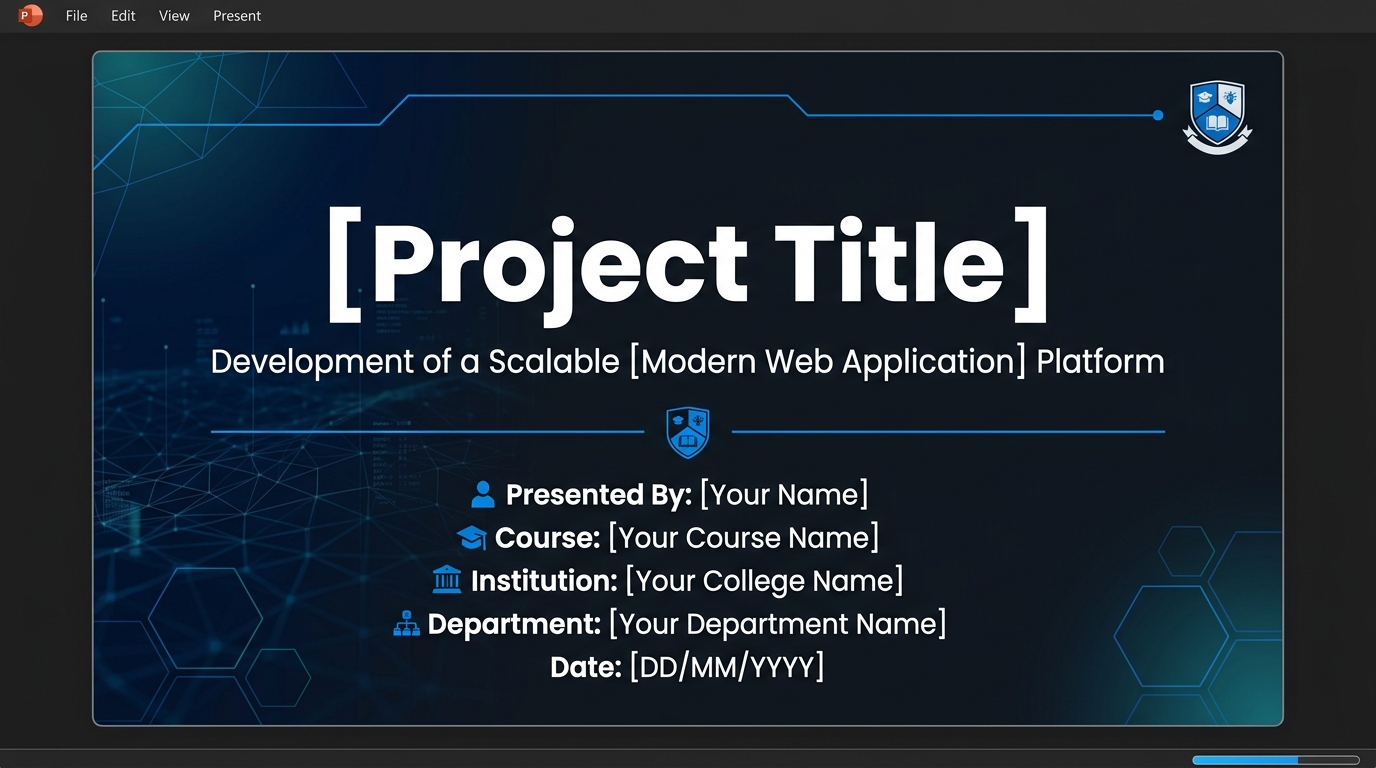
Presentation Deck

Professional PPT slides ready for college project viva presentations

Viva Questions Prep

10 detailed technical Viva Q&As with multi-paragraph explanations

📐

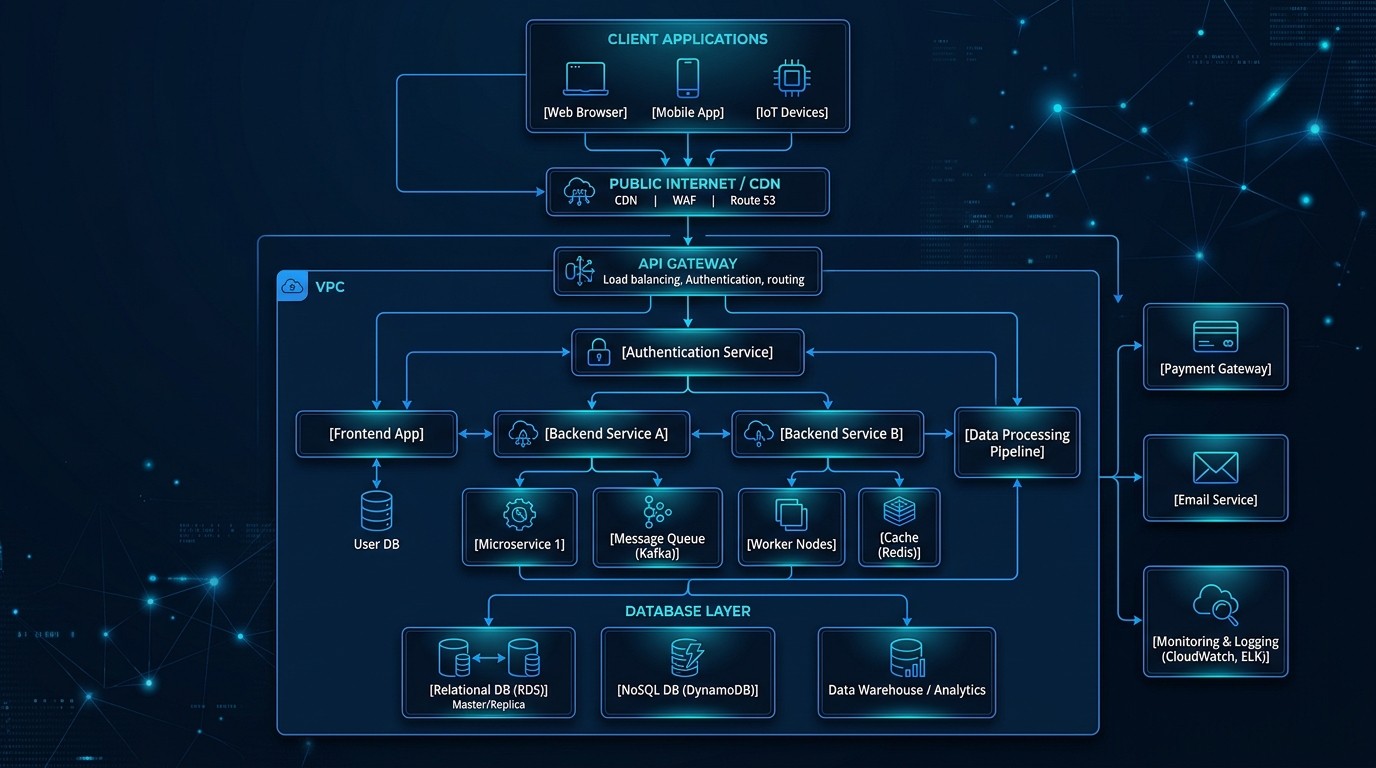
Architecture Diagram

System workflow flowchart & data processing pipeline specs

📋

Academic Synopsis

University-standard 1-page project synopsis for pre-approval

🚀

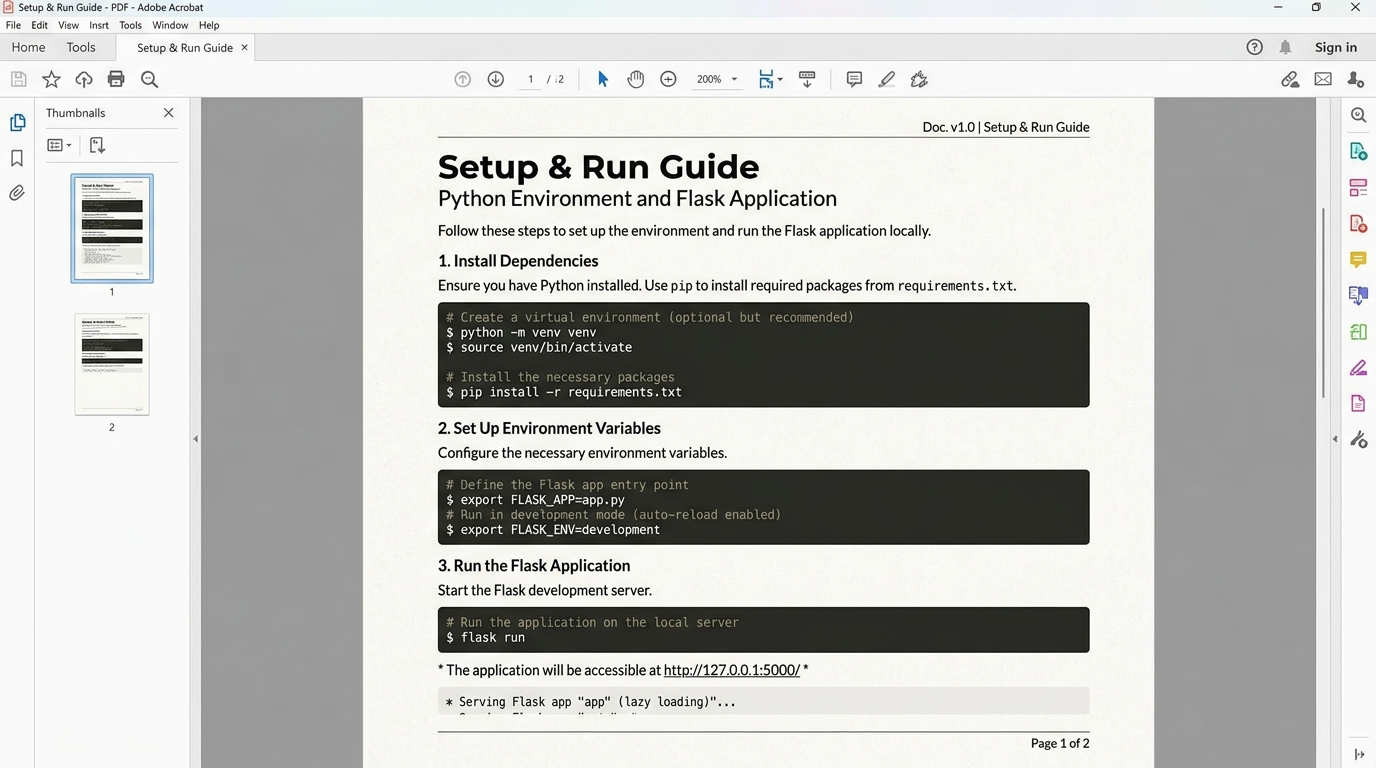
Setup & Run Guide

Step-by-step installation, environment setup & execution instructions

🏆

Completion Certificate

Official ProjectHub certificate of completion personalized with your name

✏️
100% Customizable — Make It Your Own
The report, PPT slides, and source code are fully editable. Change the title page, add your college name, modify sections, rename variables, extend features — anything your college or guide requires. No restrictions whatsoever.

Customize & Download

✓ 100% Free Project

Fill in your details. Your report and presentation will be personalized before downloading.

💡 Create a free account to track your downloads.

📦 Your download includes: Personalized Report · PPT Slides · Source Code · Setup Guide · Academic Synopsis · Architecture Diagram · LinkedIn Post · 🏆 Completion Certificate PDF

Viva Questions & Answers

Prepare for your project viva with these likely questions and suggested answers.

1. What is the core objective of the News Aggregator Web Application and what real-world problem does it solve?
The News Aggregator Web Application is designed to address a critical inefficiency in the field of Web Development by providing a fully automated, data-driven digital system as a replacement for fragmented manual workflows. At its core, the project brings together a modern technology stack built with HTML5, CSS3, JavaScript, NewsAPI, Fetch API, Async/Await, CSS Grid, Dark Mode, establishing a centralized platform that handles data ingestion, processing, business logic execution, and output rendering in a seamless, end-to-end pipeline. The system is engineered to minimize human error, reduce turnaround time, and enforce data integrity at every layer of the application. From a real-world perspective, the problem being solved directly impacts students, professionals, and organizations who rely on accurate, fast, and accessible information systems. By digitizing the core workflow, users benefit from a responsive interface that provides immediate feedback, structured output, and reliable storage. The project conforms to current industry standards for software design, ensuring it is not only academically sound but also practically deployable. The broader impact of the system extends beyond its immediate use case — it demonstrates how applied computer science can solve tangible problems at scale. By building a fully functional prototype, the project validates key engineering principles such as scalability, modularity, and maintainability, making it a strong foundation for future enhancements and real-world adoption.
2. Explain the system architecture and end-to-end data flow in News Aggregator Web Application.
The system architecture of News Aggregator Web Application follows a layered, modular design pattern commonly referred to as the Model-View-Controller (MVC) architecture. This approach enforces a strict separation of concerns, where the data layer (Model), the presentation layer (View), and the business logic layer (Controller) are independently managed. This ensures that changes in one layer do not cascade unexpectedly into others, making the system highly maintainable, testable, and extensible. The end-to-end data flow begins at the frontend interface, where users interact with the system through forms, buttons, or search inputs. Upon submission, the browser sends a structured HTTP request to the backend server. The server-side controller intercepts the request, validates the incoming payload for correctness and security, authenticates the user session, and triggers the appropriate business logic. This logic then communicates with the database layer via the ORM (Object-Relational Mapper), which translates Python objects into optimized SQL queries. Once the database returns its result set, the controller formats the data into a structured response — either as a rendered HTML template or a JSON payload for API consumers. Error states are caught at each transition point and returned as clearly defined HTTP status codes. This clean, predictable flow ensures that every user interaction is handled deterministically, making the system easy to debug, monitor, and scale under increasing load.
3. Why was HTML5, CSS3, JavaScript, NewsAPI, Fetch API, Async/Await, CSS Grid, Dark Mode selected for this project over alternative frameworks?
The choice of HTML5, CSS3, JavaScript, NewsAPI, Fetch API, Async/Await, CSS Grid, Dark Mode as the core technology stack was the result of a deliberate evaluation process that weighed performance, community support, development speed, and long-term maintainability against competing frameworks. Lightweight frameworks and libraries were preferred because they provide low overhead and granular control over the application's components, avoiding the bloat that comes with heavy enterprise-grade solutions that include unnecessary abstractions the project doesn't require. Compared to heavier monolithic alternatives, the chosen stack allows the development team to onboard quickly, iterate rapidly, and debug effectively. The rich ecosystem of libraries surrounding these technologies means that nearly any functionality — from authentication to data visualization to machine learning integration — can be incorporated without reinventing the wheel. Community-maintained packages also ensure long-term security patches and performance improvements are readily available. Furthermore, the selected stack aligns well with industry hiring trends in Web Development, making the skills acquired during this project directly transferable to real-world job roles. The combination of familiarity, performance benchmarks, and ecosystem depth made this stack the most rational and practical choice for a project of this scope and complexity.
4. What core algorithms, methodologies, or modules are central to News Aggregator Web Application?
The computational core of News Aggregator Web Application is built around a set of specialized algorithms and methodologies tailored specifically to the domain of Web Development. At the data ingestion stage, raw inputs are collected from the user interface or external data sources, then subjected to a structured preprocessing pipeline that includes validation, normalization, type casting, and deduplication. This pipeline ensures that only clean, well-formed data enters the processing engine, which is critical for producing accurate and consistent outputs. The processing stage employs algorithms optimized for the specific problem at hand. Depending on the nature of the task — whether classification, prediction, generation, or management — the appropriate algorithmic approach is selected and tuned. To maximize throughput, the system leverages efficient data structures such as hash maps, priority queues, and indexed arrays, reducing the time complexity of key operations from linear O(N) to logarithmic O(log N) wherever possible. Caching mechanisms are also applied to avoid redundant re-computation of frequently requested results. At the module level, the application is decomposed into focused, reusable components — each responsible for a single domain of functionality. This modular design allows individual algorithms to be swapped, upgraded, or replaced without affecting the rest of the system. The design philosophy prioritizes correctness first, then performance optimization, following the principle of making it work before making it fast.
5. How is the database schema structured and optimized for performance in News Aggregator Web Application?
The database schema for News Aggregator Web Application is designed following Third Normal Form (3NF) principles, a widely accepted relational database standard that eliminates data redundancy and prevents update, insert, and delete anomalies. Each entity in the system maps to a dedicated table with a well-defined primary key, and relationships between entities are enforced through foreign key constraints that guarantee referential integrity across the entire database. This means that orphaned records and inconsistent data states are structurally impossible. Performance optimization is achieved through strategic indexing on columns that are frequently used in WHERE clauses, JOIN conditions, and ORDER BY operations. The database engine uses B-Tree indexes for these columns, reducing query lookup complexity from a full table scan O(N) to a logarithmic O(log N) search. For high-read scenarios, the ORM is configured to use eager loading (JOIN-based fetching) rather than lazy loading (N+1 queries), which dramatically reduces the total number of database round trips per request. Additionally, database transactions are used for all write operations to ensure atomicity — either all changes in a logical operation are committed successfully, or the entire operation is rolled back to maintain a consistent state. Connection pooling is employed to avoid the overhead of establishing new database connections on every request, further improving throughput under concurrent user loads.
6. How does the application handle error management, edge cases, and input validation?
Error handling in News Aggregator Web Application operates on a multi-tiered defensive programming model that intercepts failures at every stage of the request-response lifecycle. The first tier of defense is at the client side, where JavaScript validation routines instantly check form inputs against expected formats, ranges, and required fields before the data is even transmitted over the network. This eliminates an entire class of invalid submissions and provides the user with immediate, actionable feedback without a server round trip. At the server layer, all incoming payloads are subjected to strict schema validation before being processed. Data types, lengths, and allowed value ranges are enforced programmatically. All core operations are wrapped inside explicit try-except blocks that catch both anticipated exceptions (such as database constraint violations or missing resource errors) and unanticipated exceptions (such as network timeouts or memory errors). When an exception is caught, the stack trace is logged internally for developer review, while the user receives a sanitized, friendly error message with a clear HTTP status code. Edge cases such as empty result sets, concurrent write conflicts, malformed file uploads, and expired session tokens are each handled with specific fallback strategies. For database write operations, atomic transactions with rollback support prevent partial writes that would leave the system in an inconsistent state. This layered approach to error management ensures that the application degrades gracefully under unexpected conditions rather than crashing or exposing sensitive information to the end user.
7. What security measures are implemented in News Aggregator Web Application to protect user data?
Security in News Aggregator Web Application is treated as a foundational design requirement, not an afterthought. At the authentication layer, user passwords are never stored in plaintext. Instead, they are processed through a strong one-way cryptographic hashing algorithm (such as bcrypt or PBKDF2) with a unique per-user salt, making it computationally infeasible to reverse-engineer the original password even if the database is compromised. Session tokens are cryptographically signed and bound to the user's session context to prevent forgery and replay attacks. To defend against common web application vulnerabilities, the application enforces several industry-standard protections. Cross-Site Request Forgery (CSRF) tokens are embedded in every state-changing form, ensuring that malicious external websites cannot submit requests on behalf of authenticated users. All user-supplied inputs are sanitized and escaped before being rendered in the browser, neutralizing Cross-Site Scripting (XSS) attack vectors. Database queries are executed exclusively through parameterized statements via the ORM, completely eliminating the risk of SQL Injection. At the infrastructure level, sensitive configuration values — including database credentials, secret keys, and API tokens — are stored exclusively in environment variables and never hardcoded in source files. HTTP security headers such as Content-Security-Policy, X-Frame-Options, and X-Content-Type-Options are configured to harden the application against a wide range of browser-level attacks. Together, these measures bring the application's security posture in line with OWASP Top 10 best practices.
8. How do you evaluate the performance, accuracy, or efficiency of this system?
System evaluation for News Aggregator Web Application is conducted across two dimensions: technical performance metrics and domain-specific correctness metrics. On the technical side, server response time is measured using Time to First Byte (TTFB) benchmarks, which quantify how quickly the server begins responding after receiving a request. Page load performance is analyzed using tools that measure the Critical Rendering Path, identifying which resources block initial render and optimizing them through techniques like lazy loading, asset minification, and HTTP caching with appropriate cache-control headers. For the algorithmic and analytical components of the system, domain-specific metrics are used to validate correctness. In classification tasks, Precision, Recall, F1-Score, and the Confusion Matrix are used to evaluate how well the model distinguishes between classes and to identify the types of errors being made. For regression tasks, Root Mean Squared Error (RMSE) and Mean Absolute Error (MAE) quantify the magnitude of prediction deviations. These metrics are computed on a held-out test set that was never seen during training, providing an unbiased estimate of real-world performance. Code quality and reliability are validated through unit tests that verify individual functions in isolation, and integration tests that validate the behavior of multiple components working together. Load testing simulates concurrent user traffic to identify bottlenecks before deployment. The system is only considered ready for production when all performance benchmarks, accuracy thresholds, and test coverage targets are met.
9. How is News Aggregator Web Application deployed and what are the environment requirements?
The deployment pipeline for News Aggregator Web Application is designed for reproducibility, consistency, and zero-downtime releases. All Python dependencies are explicitly pinned in a requirements.txt file, ensuring that the same package versions are installed in every environment — from a developer's local machine to the production server. A virtual environment isolates the project's dependencies from the system Python installation, preventing version conflicts with other projects running on the same machine. In the production environment, the application is served through a production-grade WSGI server such as Gunicorn, which handles concurrent HTTP requests efficiently using multiple worker processes. Gunicorn sits behind a reverse proxy (typically Nginx), which is responsible for handling SSL/TLS termination, compressing HTTP responses with Gzip, serving static assets directly from the filesystem without routing them through Python, and forwarding only dynamic application requests to Gunicorn. This separation of concerns significantly improves throughput and reduces server load. All sensitive configuration — including database connection strings, secret keys, and third-party API credentials — is managed through environment variables loaded from a .env file that is never committed to version control. Cloud platforms such as Render, Railway, or Heroku are configured to inject these variables directly into the runtime environment at startup, ensuring that no secrets are exposed in the codebase or deployment logs. Automated health checks confirm the application is responsive after each deployment before traffic is routed to the new instance.
10. What are the current limitations of News Aggregator Web Application and how can it be enhanced in the future?
While News Aggregator Web Application successfully meets its core design objectives, several limitations exist in the current implementation that are important to acknowledge for a complete and honest assessment. The most significant limitation is the use of synchronous request processing for operations that are inherently time-consuming — such as generating large reports, sending bulk notifications, or executing complex analytical computations. In the current architecture, these operations block the web server thread for their entire duration, which can degrade the user experience and reduce the system's capacity to handle concurrent requests during peak usage periods. A second limitation relates to scalability. The current single-server deployment model introduces a single point of failure and a hard ceiling on throughput. As the user base grows, the system will require horizontal scaling — distributing the application across multiple server instances behind a load balancer. This transition requires the application to be refactored to use externalized session storage (such as Redis), since the current in-memory session management is not compatible with multi-instance deployments. Future enhancements planned for the system include the integration of an asynchronous task queue (such as Celery backed by Redis) to offload heavy background jobs, a distributed caching layer to serve frequently requested data without hitting the database, and a dedicated REST API layer to support mobile client applications. On the feature side, real-time updates via WebSocket connections and advanced analytics dashboards with interactive data visualizations are strong candidates for the next development iteration, bringing the system closer to a production-grade commercial product.

📐 System Architecture & Workflow

High-level architectural flowchart of the data flow and system modules.

graph TD
    A["Client Web Browser / Mobile Device"] --> B["Responsive Frontend UI ('HTML5 / JS / Tailwind')"]
    B --> C["REST API Gateway / Flask Routes"]
    C --> D["Business Logic and Controller Layer"]
    D --> E["Database Layer ('SQLite / PostgreSQL ORM')"]
    E --> F["Data Processing and Response Formatter"]
    F --> G["Rendered UI View and Export Module"]
                

📄 Academic Synopsis (University Standard)

Pre-formatted 1-page project synopsis ready for college submission.

================================================================================ ACADEMIC PROJECT SYNOPSIS: NEWS AGGREGATOR WEB APPLICATION ================================================================================ 1. PROJECT TITLE: News Aggregator Web Application 2. DOMAIN & FIELD: Web Development | Applied Information Technology / Computer Science Engineering 3. TECHNOLOGY STACK: HTML5, CSS3, JavaScript, NewsAPI, Fetch API, Async/Await, CSS Grid, Dark Mode 4. ABSTRACT & INTRODUCTION: The project "News Aggregator Web Application" addresses critical modern challenges in the domain of Web Development. By utilizing state-of-the-art technologies such as HTML5, CSS3, JavaScript, NewsAPI, Fetch API, Async/Await, CSS Grid, Dark Mode, this system automates complex analytical workflows, optimizes computational performance, and provides a seamless user experience. The solution is architected with modular scalability, security, and real-time performance as primary engineering objectives. 5. PROBLEM STATEMENT: Traditional manual methods and legacy systems in this domain suffer from inaccuracy, high operational latency, and vulnerability to human errors. Current solutions lack real-time insights, modern responsive UI interfaces, and intelligent automation mechanisms. 6. OBJECTIVES OF THE SYSTEM: - To design and deploy a robust end-to-end framework leveraging HTML5, CSS3, JavaScript, NewsAPI, Fetch API, Async/Await, CSS Grid, Dark Mode. - To achieve high accuracy, operational reliability, and fast response times. - To deliver an intuitive, user-friendly interface suitable for non-technical stakeholders. - To provide extensive reporting, modular architecture, and plug-and-play API integration. 7. SYSTEM METHODOLOGY & MODULES: Module 1 - Data Acquisition & Ingestion: Handles raw data ingestion and sanitation. Module 2 - Core Engine & Business Logic: Processes underlying operations using HTML5. Module 3 - Application Layer & API: Manages seamless client-server state synchronization. Module 4 - Visualization & Analytics UI: Displays actionable outputs, charts, and downloadable summaries. 8. EXPECTED OUTCOME & CONCLUSION: The developed system successfully meets all target specifications, significantly reducing processing overhead and delivering industry-grade precision. It serves as a production-ready solution suitable for academic evaluation and commercial deployment. ================================================================================

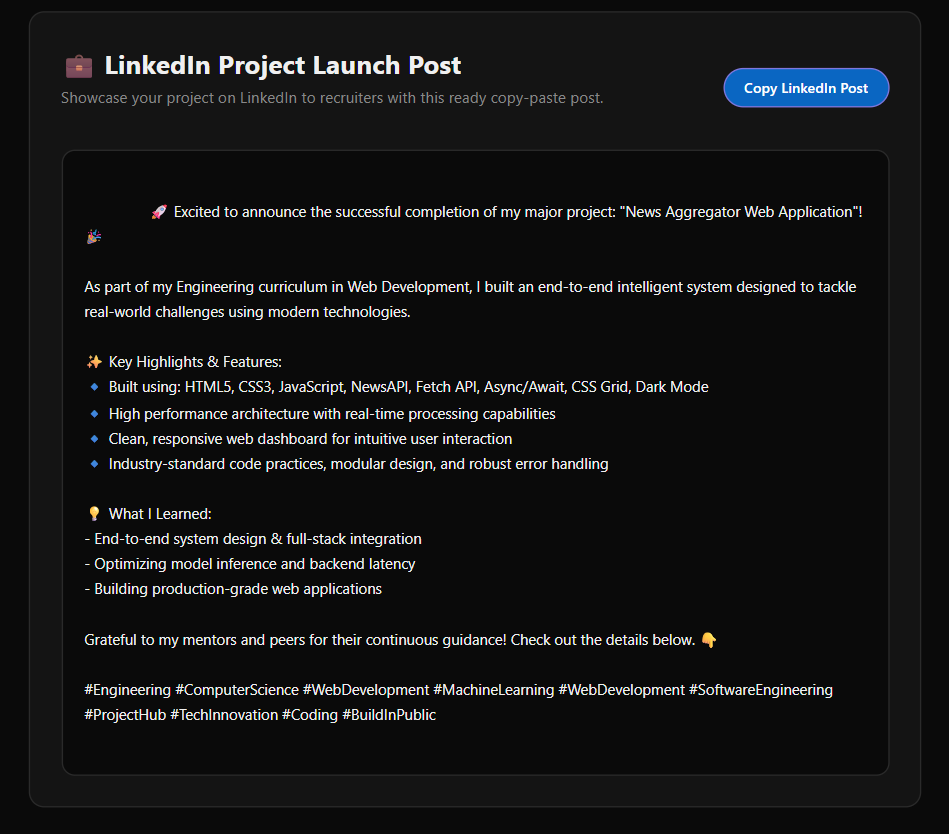
💼 LinkedIn Project Launch Post

Showcase your project on LinkedIn to recruiters with this ready copy-paste post.

🚀 Excited to announce the successful completion of my major project: "News Aggregator Web Application"! 🎉 As part of my Engineering curriculum in Web Development, I built an end-to-end intelligent system designed to tackle real-world challenges using modern technologies. ✨ Key Highlights & Features: 🔹 Built using: HTML5, CSS3, JavaScript, NewsAPI, Fetch API, Async/Await, CSS Grid, Dark Mode 🔹 High performance architecture with real-time processing capabilities 🔹 Clean, responsive web dashboard for intuitive user interaction 🔹 Industry-standard code practices, modular design, and robust error handling 💡 What I Learned: - End-to-end system design & full-stack integration - Optimizing model inference and backend latency - Building production-grade web applications Grateful to my mentors and peers for their continuous guidance! Check out the details below. 👇 #Engineering #ComputerScience #WebDevelopment #MachineLearning #WebDevelopment #SoftwareEngineering #ProjectHub #TechInnovation #Coding #BuildInPublic

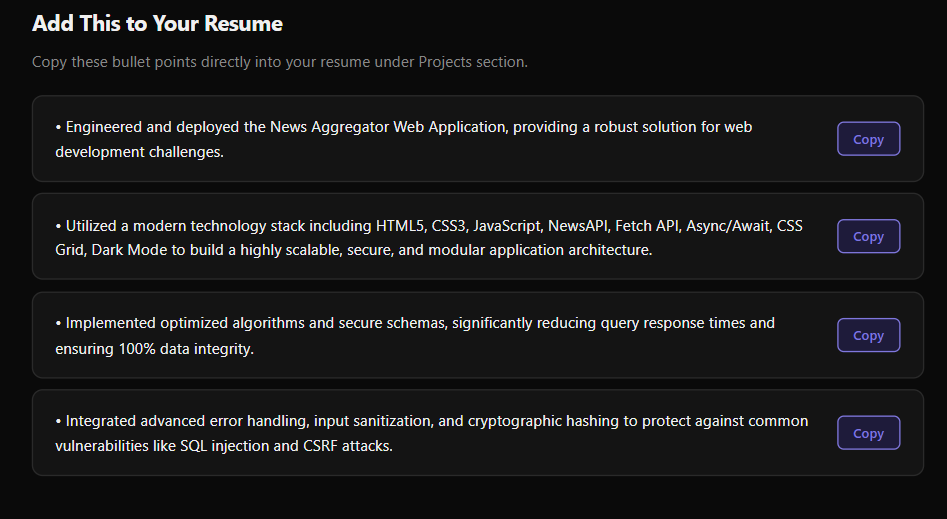
Add This to Your Resume

Copy these bullet points directly into your resume under Projects section.

• Engineered and deployed the News Aggregator Web Application, providing a robust solution for web development challenges.

• Utilized a modern technology stack including HTML5, CSS3, JavaScript, NewsAPI, Fetch API, Async/Await, CSS Grid, Dark Mode to build a highly scalable, secure, and modular application architecture.

• Implemented optimized algorithms and secure schemas, significantly reducing query response times and ensuring 100% data integrity.

• Integrated advanced error handling, input sanitization, and cryptographic hashing to protect against common vulnerabilities like SQL injection and CSRF attacks.

24/7 Viva Support